Live From Her Studio: Edie Baskin on Photography, SNL, and Capturing Icons
Ahead of her exhibition at The Gallery at Soho Grand, the photographer who gave SNL its look reflects on 1970s New York, artistic experimentation, and 25 years behind the lens at Saturday Night Live, in conversation with writer Holly George-Warren.
From Saturday Night Live’s debut on October 11, 1975, Edie Baskin’s photographs appeared on-screen, beginning with the opening title sequence. During her 25-year tenure as SNL’s official photographer, her images, used as “bumpers,” defined the show’s visuals. Then a TV convention, bumpers were the graphics displayed on-screen for a few seconds while a program cuts to and from commercial breaks. Baskin’s artistry elevated the format, turning it into an artform with her evocative photography. As explained by Lorne Michaels: “Since the host and musical guest changed every week, we decided their portraits would be the identifying things on the bumpers with the SNL logo in there somewhere. . . With her signature hand-tinting, Edie Baskin established the portrait tradition.” Some of these photos are among her work on exhibit, “Edie Baskin: Live From My Studio,” at the Soho Grand in New York City (May 21st to January 10th).
Here, writer Holly George-Warren and Edie Baskin discuss Edie’s career as a groundbreaking photographer.
HGW: How would you describe the through line that connects the pieces in your exhibition at the Soho Grand?
EB: I would imagine that it’s my hand-tinting work. I’ve included images from the first five years of my tenure at Saturday Night Live. I was originally hired in 1975 to do Saturday Night Live’s opening title sequence. They wanted me to portray the energy of downtown New York at night.
HGW: In 1975, New York City was definitely gritty. Gerald Ford had said, “NYC, drop dead.” Can you tell me a little bit about what you remember when choosing certain locations and places to photograph?
EB: I lived downtown in SoHo on Crosby Street at the time, where not many people lived. Back then, there were only a few art galleries – OK Harris and Leo Castelli were the big ones. When I went out into the street to find images to photograph, I just went to areas I was familiar with that I thought would represent New York. Like I photographed a cab driver taking a break and eating some watermelon, which I thought was a pretty good representation of the city at that time.
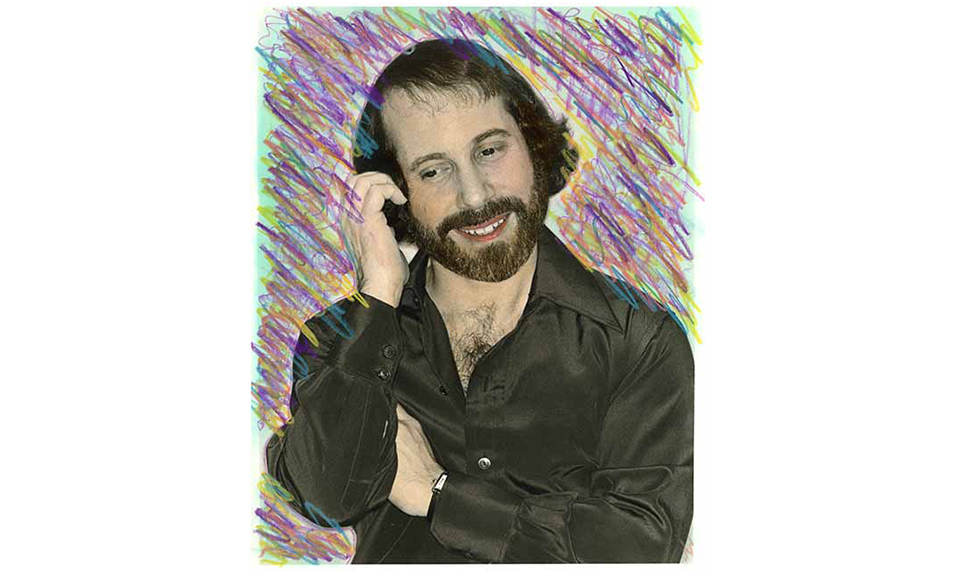
Paul Simon, 1975. Photograph by Edie Baskin
HGW: A lot of Italian bakeries were in your neighborhood in those days, right?
EB: Yes, in Little Italy. That’s in my title sequence, too. But those photos are not in this show.
HGW: How did your gig segue from shooting the title sequence to actually photographing the portraiture for the bumpers?
EB: I just did it on my own without even pitching the idea. The first bumper I did was of Paul Simon. I knew him. We were friendly, so that was comfortable for me.
HGW: He was the host of the second episode of SNL. Did you just start casually shooting Paul Simon on the set?
EB: No, I had met him at a Grammy afterparty in LA. We became friends, and I had taken a picture of him standing by his piano. I don’t know if it was taken in his house or in his studio. I happened to have it, so I just stuck that photo in with the rest of the title images that I gave to SNL. They were really happy with it. So after that, I began photographing every host and every musical guest. Those photos were eventually put into the titles.
HGW: Once you started photographing the hosts and guests as well as the NYC stills, did that feel like a different creative challenge — shooting anonymous New Yorkers versus people who were already famous and image-conscious?
EB: I loved it because it made me more a part of the show. It allowed me to connect with people. And at that time, the more work I did, the happier I was.
HGW: I know you don’t want to toot your own horn, but I think basically you took something that had been a commercial platform – these bumpers that were originally for Station IDs – and you turned them into an artform with your inspiring photography.
EB: I’m not going to say that, but you can say that.
HGW: (laughs) OK, I will say that.
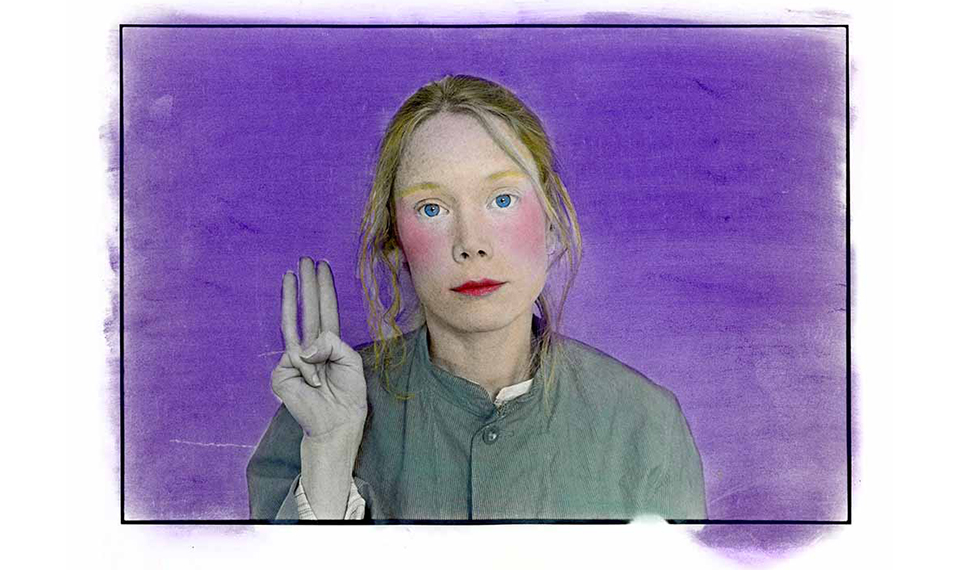
Sissy Spacek, 1977. Photograph by Edie Baskin
HGW: How did you get into the hand-tinting of the black and white photographs? Had you done that for fun on your own before professionally?
EB: There were a couple photographers – Jean Pagliuso and Benno Friedman – who were doing hand-tinting, and I liked their work. So I thought, “Well, I’ll try that!”
HGW: Did you get any sort of instruction on how to do it?
EB: I just did it on my own.
HGW: What kind of materials did you use for the hand-tinting?
EB: I used pencils and oils and pastels. There’s a line of products I like called Marshalls. I’d use anything I could get my hands on that held to the paper. There was a certain kind of photographic paper I liked, too, called Portriga Rapid. It’s porous and takes the color. They don’t make it anymore.
HGW: Can you describe what a hand-tinting session actually looked like — were you at a desk, working under a certain light? What did the process feel like physically?
EB: I would work in my loft on Crosby Street where I had a big table. When I had made my photo choices and they were printed, I would just lay them all out in front of me and do the hand-tinting one after another. Physically, it would isolate me from the rest of what was going on in my life. It was very meditative.
HGW: How did you decide which colors to use for a given portrait? Was it intuitive, or did something about the person guide you?
EB: It was very much intuitive.
HGW: Do you feel you developed as a photographer while you were at SNL? I mean, did the experience of photographing so many types of personalities have an effect on you as a photographic artist?
EB: Well, yes, I think you can grow anywhere you work for 25 years. As long as you keep pushing yourself to learn. But Lorne gave me the creative control to explore and try different mediums. Over the years, I tried Xeroxes, Polaroid transfers, and eventually wound up working on a computer.
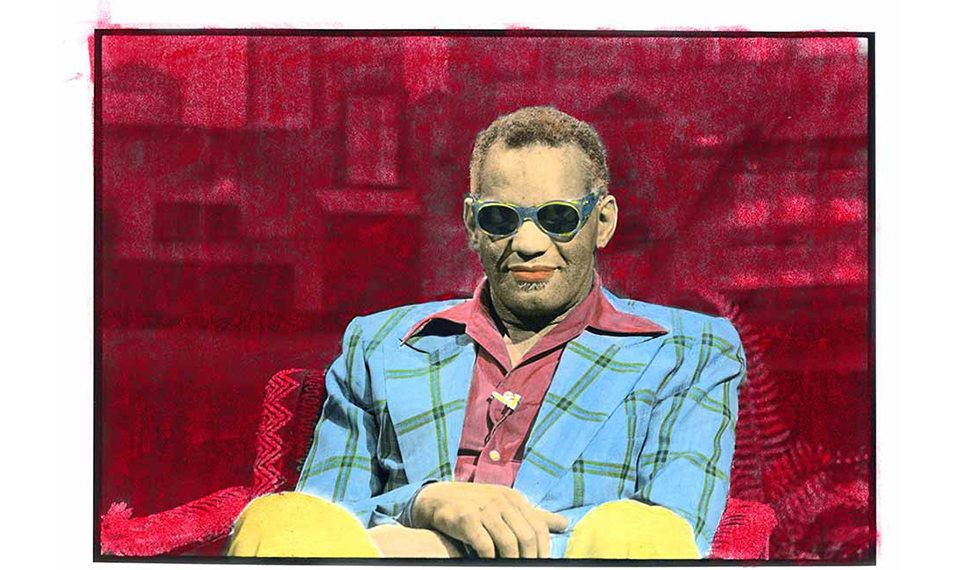
Ray Charles, 1977. Photograph by Edie Baskin
HGW: When you look at these early images now, is there anything that surprises you — something that holds up differently than you’d expect after all this time?
EB: The only thing that’s kind of surprising or amazing is how much there is of it.
HGW: This exhibition feels like a specific moment in time—what made you feel like now is the right moment to share this work?
EB: I had never really shown this part of my work. My book, Live From My Studio: The Art of Edie Baskin, came out in October 2025, and I always imagined an exhibition to coincide with its publication. I had a show at Ochi Gallery in Sun Valley that showcased portraits I had taken of Native Americans, but it did not include my early hand-tinted SNL work. If I was ever going to show this work, downtown New York would be the right venue for it. I just thought maybe this would be a good time to get it out there.
HGW: Is there one piece in the show that you feel captures this whole period most completely for you?
EB: There are several images that capture the 1970s: The Rolling Stones rehearsing. My title sequence images of the Statue of Liberty. The Coneheads.
HGW: What do you hope that someone who grew up watching SNL will take away from seeing these photographs in person in this exhibit — as art on a wall rather than a flash on a TV screen?
EB: For anyone interested in making art, I hope they feel encouraged to explore — to experiment freely and use whatever materials or techniques inspire them. And that they see these images as going way beyond being a logo or brand on TV. Instead, I hope these images convey new dimensions.
***
Edie Baskin: Live From My Studio is on view at The Gallery at Soho Grand through January 10, 2027. Gallery hours are Wednesday through Sunday, 12–6 pm
Interview by Holly George-Warren
Featured image: Statue of Liberty, 1975. Photography courtesy of Edie Baskin