Everybody’s Fly: Fab 5 Freddy Talks to Richard Boch
The pioneering artist who bridged Graffiti, Hip-Hop, and the downtown art world reflects on a life at the center of New York's creative explosions.
There was a “Rapture” in 1980 and it hit Number One on the Billboard charts. The world was sitting on the cusp of two decades, New York City was in a state of semi-orchestrated chaos and the cultural shift in music and art was seismic. That’s when Fred “Fab 5 Freddy” Brathwaite got name-checked and quoted by Blondie’s Debbie Harry as she rapped the game-changing line, “Fab 5 Freddy told me everybody’s fly.” What came next was the beginning of Fab’s multi-faceted career as the nice guy-visionary who helped shift, spin and change the world of pop culture.
Like so many other people who have remained in my life, I met Fred at the door of a club on White Street in Downtown New York City. The club was Mudd and it was a scene like nothing before or since—and for many of us, it was a place that felt like home.
Today, Fab 5 Freddy remains both a catalyst and signifier of cultural change—his new memoir, Everybody’s Fly, offering up a life story that shows no sign of slowing down. I recently had the opportunity to catch up, laugh and shake our heads together in near disbelief at the path he’s followed.
Here’s just some of what he had to say.
Richard Boch: Hi Fred. It’s great how we’ve known each other for such a long time—probably since early 1979. What’s even more remarkable is how we’ve stayed connected. You’ve followed a wild, yet direct path based on a vision of cultural change through Graffiti, Rap and to a degree the onset of breakdancing, music videos and filmmaking. Now you’re putting it all out there in your just-released memoir, Everybody’s Fly. But let’s step back a bit and talk about your early 1970s Brooklyn based crew, the Fabulous 5. You were still very much a kid during those early days of tagging trains and Graffiti yet it’s certainly part of your legacy.
Fab 5 Freddy: Well, I like to describe it as just adolescent teenage activity. It wasn’t like an art movement from the beginning, but then I used to cut school and go to museums around New York City, especially the Metropolitan, and I got very familiar with certain paintings that I’d been seeing in art books, and I’d be like, oh shit, I know this guy, I know this guy’s work! I stood in front of the paintings and it made me closer to the work and I’d begin to see a connection between what Pop artists had been doing in the 60s and what Graffiti was kind of doing. Those were the big inspirations. Then once Graffiti went from just writing your name to painting a big picture of your name—oftentimes covering an entire subway car—that led me to seek out one of the members of the Fabulous Five crew, especially the most epic and incredible, Lee Quiñones.
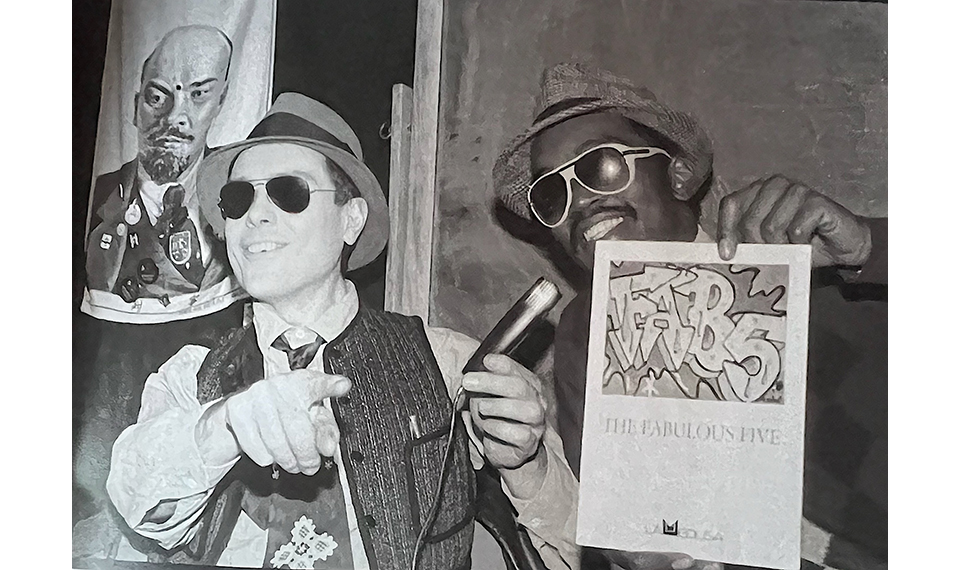
Fab 5 Freddy and Glenn O’Brien, TV Party, 1980. Photo Bobby Grossman
RB: Later that same decade, you connected with the writer Glenn O’Brien, who toward the end of 1978 started his cable-access show TV Party, the pioneering and very offbeat talk-show collective of quirk, personality and talent. Then at some point in early spring 1979, the TV Party cast and crew began frequenting the Mudd Club, another breeding ground of cultural change. That’s where you and I initially connected. What was it about TV Party and Mudd Club that really spoke to you and pulled you in?
F5F: Well, they’re really just pieces of a puzzle that fell in place—I didn’t yet see them as being a perfect fit but yeah, essential to my story. I was still a student at Medgar Evers College and became friends with a kid in school that was really into Reggae so we said, “Hey why don’t we start a Reggae program” on this new radio station that the college has access to. So, we’re doing this Reggae program, but really because of my curiosity and looking at art and becoming familiar with Andy Warhol and Roy Lichtenstein and just absorbing the whole Pop Art thing, I learned that Andy had a magazine called Interview. In the back pages, Glenn O’Brien had a column called “Glenn O’Brien’s Beat” where he would write about different genres of music in a kind of appreciative way and not in a typically critical way. I didn’t understand initially until I finally met Glenn and he explained, “I only write about what I like” and I thought, Oh shit, that’s it. He’s writing about Reggae, New Wave, Punk, Brian Eno, dance music, Chic and George Clinton! So, I called Interview up to see if he might come on the radio and give us an interview and he said, “Yes, I’ll come out.” And that’s what happened—that’s how my connection to TV Party began.
Then one night when I’m telling some story, somebody says I don’t know shit, and then everybody’s like, “Hey after taping we’re going to the Mudd Club—so I just go along and that becomes my initial introduction—and just like that, I’m like, oh yeah, this is the place to be!
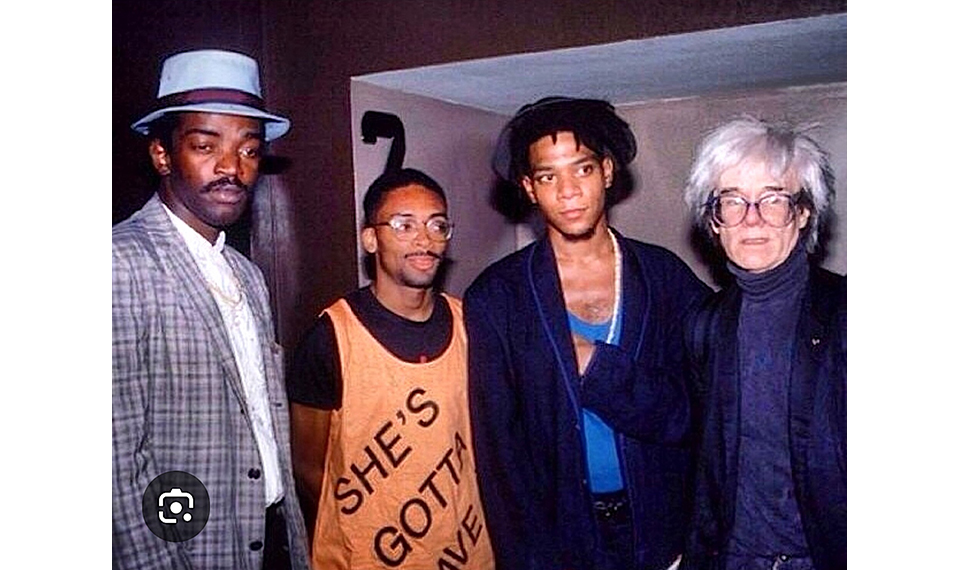
Fab, Spike Lee, Basquiat, Warhol, She’s Gotta Have It premier, 1986. Private archive
RB: Somewhere in the mix, you met Debbie Harry and Chris Stein of Blondie, and you established a close friendship that exists to this day. You were pivotal when it came to introducing them to Rap and Graffiti and they in turn were essential collaborators to the cultural shift that was brewing. From the early days of Punk to the early days of Rap and Hip-hop, they were front line. Tell me about the Blondie mega-hit “Rapture” and what it meant and still means to you.
F5F: TV Party was every Tuesday night. It was a really rinky-dink, run down studio on 23rd St. I think the show went live at 9:30 or 10 o’clock, something like that, and it was live TV to the handful of people that had public-access cable. I became good friends with Chris and Debbie of Blondie—Chris was the co-host—and they just embraced me and became like mentors to me in a way, because of all these crazy ideas I’m developing and I’m bouncing off of them and Glenn (O’Brien). So that really begins my journey.
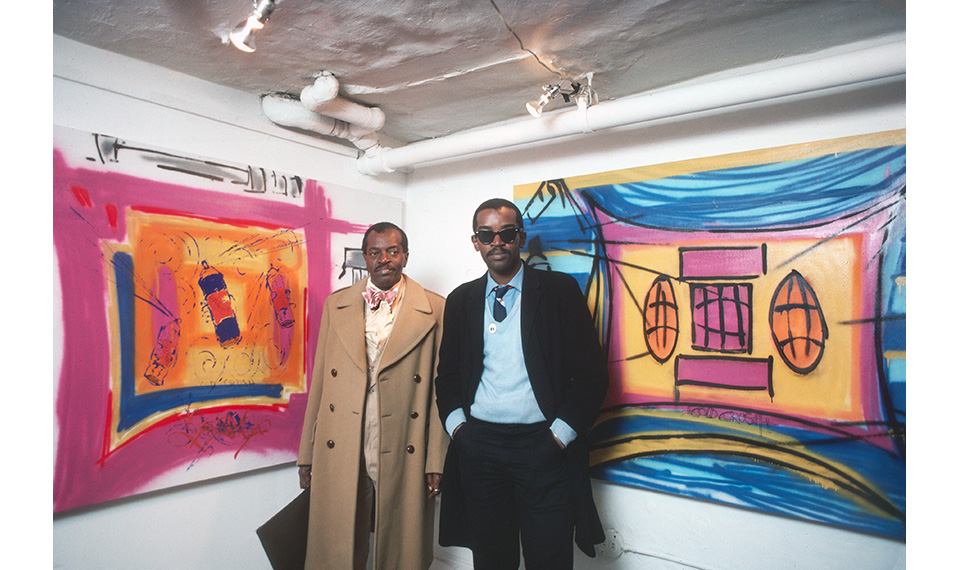
Fab 5 Freddy with his dad and his paintings, Fun Gallery, 1981. Courtesy Fred Brathwaite
RB: Well, you’re an influence on them as well—and the street is an influence on everybody!
F5F: And “Rapture” is one of the great stories of my life, so it’s a big part of my book. The title of my book, which is Everybody’s Fly, is kind of a way I used to describe our friendship—somewhat of a cultural exchange, because I’m sharing this new culture that’s developing. There’s no Rap records out for the most part—it’s completely underground, but I’m looking at and reading about Punk and New Wave and fascinated by how it’s challenging the established rock ‘n’ roll canon, and they, Chris, Debbie and their band Blondie, were challenging that and ripping it to shreds! It was really exciting. So yeah, they basically totally supported my ideas.
Then, Chris told me that they wanted to do some stuff that was funky dance music. DJs were already cutting and mixing and rapping over the groove, and Chris was just fascinated by all this shit I’m sharing with him. So, they go to make a record and then come back in town and say, we got some new stuff to play for you—so they play a couple of songs, and then they put on this one song and Debbie starts singing and it sounds really good, and then she starts rapping and I am blown away. Debbie’s rapping and she mentions me, she mentions TV Party, everything! I thought they were goofing around in the studio and made some kind of track—playing around just to let me hear it, that was how I took it—they never said this is our next single or this is on the new album, and I’m like that’s too crazy to even consider—so yeah, that is the beginning of Rap becoming a huge part of cultural change.
RB: A month or so later, in early 1981, that record, Blondie’s Autoamerican comes out. “Rapture” is a hit, and it becomes the first, history-making single with a Rap lyric to reach number one on Billboard’s Hot 100. That lyric included the immortal line, “Fab 5 Freddy told me everybody’s fly.”
F5F: But keep in mind nobody really knows me yet, and the people are singing along, saying every version of what they thought it was—you know how people sing when they think they know the words and what it’s about. Well, the slang of the scene was fly guys and fly girls, you know, like a fly guy had the right gear and the right moves.
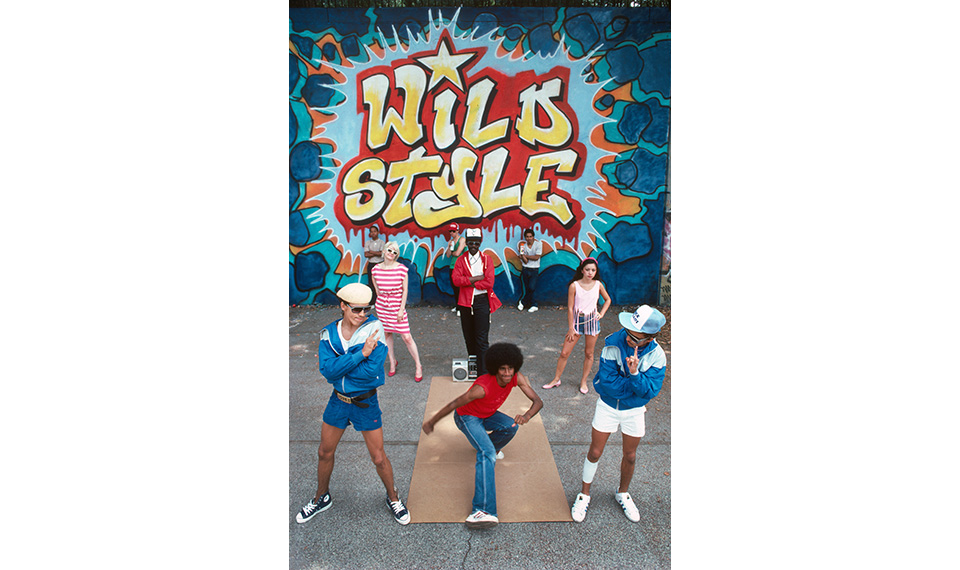
Wild Style mural by ZEPHYR, REVOLT, SHARP, 1983 Front row: DOZE, Frosty Freeze, Ken Swift; middle row: Patti Astor, Fab 5 Freddy, LADY PINK; back row: Lil Crazy Legs, REVOLT, SHARP. Photo: Martha Cooper
RB: Okay, and by that time you’ve really started to mix it up and move things forward—and the art world was certainly ripe for a new vision and spirit when Graffiti came knocking at the door. It was back in 1980 when you painted the entire side of a New York City subway car with giant-size, Warhol-inspired Campbell’s Soup Cans. Gallery shows in Europe and Los Angeles soon followed. “Rapture” comes out a few months before the April 1981 exhibition Beyond Words, which you co-curated with artist Futura 2000 at Mudd Club. Eventually the Charlie Ahearn film Wild Style, that you starred in and co-produced, is released in 1983, and before you know it, The East Village art scene is exploding. Did you ever imagine how fast it would all happen?
F5F: Chris (Stein) already had the visionary idea to make music videos even before MTV happened because he’s dialed into the technology. He knows there’s something coming, and he figures that in the future, all groups are gonna turn their songs into videos so you see as well as hear. That’s how the “Rapture” music video with Jean-Michel Basquiat playing DJ happens, which is also full of all our TV Party friends walking around. It becomes one of the first videos MTV plays because they really don’t have too many videos yet.
By then Keith Haring and I connected and became really good friends at the Times Square Show. Steve Mass (Mudd Club owner) started asking if I could book some Rap acts to come and perform at the club. I’m like, oh yeah, and because I’m working on the Wild Style film with Charlie Ahearn, I know all the major Rap people at that time, so I invite them and they all show up. They’re coming and performing at the Mudd Club and the crowd’s going crazy and that’s kind of the first real introduction of a lot of this stuff to the downtown scene.
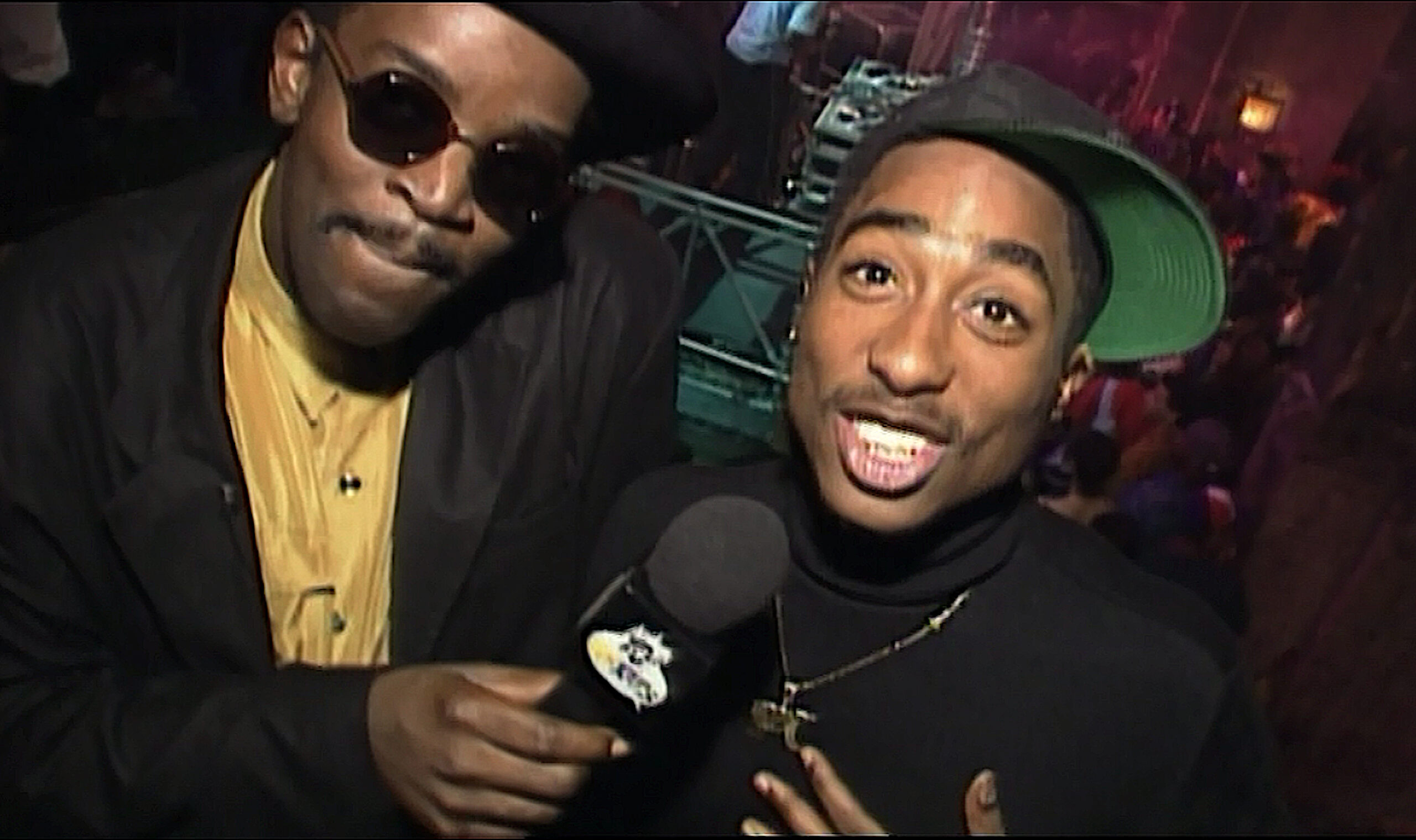
Yo! MTV Raps, Fab 5 Freddy and Tupac Shakur, early 1990s, screen still. Private archive
RB: Tell me, Fred, how you’ve managed to keep your wits about you considering you had a career that’s covered so much—Graffiti and Rap, Hip-hop luminary, VJ and host of Yo! MTV Raps, besides being a visual artist, video and music producer, actor and filmmaker.
Now your memoir, Everybody’s Fly, is finally here. So how do you feel?
F5F: I feel great, Richard—I mean listen, your book (The Mudd Club) was an inspiration. I should say that book, my book—you know, it has blown my mind, to be honest with you—how continually fascinated people are about that time in New York.
RB: Ok, Fred—and now I have to ask—what’s next?
F5F: Well, a bunch of stuff, and it seems like I’m doing 15,000 things at once. The audiobook thing is really a big deal, and I’ve been surprised how many friends are into audiobooks, so I said no problem, I’m definitely doing that. Then I thought, what if I add some music and I get music that sounds like the kind of music that I’m describing in the book—from the jazz I heard as a kid to the funk in the 70s and then early hip-hop, even Punk from when I’d go down and explore the scene at CBGB. I also did little podcast-type interviews with several of the people that are critical in the telling of my story that are gonna pop up in between the chapters of my audiobook. Interviews with Lee (Quiñones), Grandmaster Flash—and of course Chris and Debbie.
View this post on Instagram
Fab 5 Freddy’s memoir Everybody’s Fly is out now, published by Viking, March 2026.
***
WORDS Richard Boch
FEATURED PHOTOGRAPH Fab 5 Freddy, Debbie Harry, Lee Quiñones, 1990, Handball Court, 1980. Photo Bobby Grossman
Richard Boch writes GrandLife’s New York Stories column and is the author of The Mudd Club, a memoir recounting his time as doorman at the legendary New York nightspot, which doubled as a clubhouse for the likes of Jean-Michel Basquiat, Keith Haring, Debbie Harry and Talking Heads among others. To hear about Richard’s favorite New York spots for art, books, drinks, and more, read his Locals interview—here.