Heathermary Jackson on NYFW and Why Personal Style Matters
Heathermary Jackson has spent decades in fashion, earning a reputation as one of the industry’s most beloved stylists. Her career has spanned editorial, music and advertising, and she has worked with publications including The Face, i-D, Vogue Italia and Purple, as well as an extraordinary range of photographers, designers, musicians and artists. Throughout it all, her approach has been distinctly her own: mixing high and low, designer and vintage, with an emphasis on personal style and the person wearing the clothes.
That sensibility extends to Brownstone Cowboys, an independent print journal and digital media house that Jackson founded and leads as creative director. Based between New York and London, Brownstone Cowboys brings together fashion, art, music and culture through long-form conversations and image-led editorials, with an interest in the people and ideas behind the work.
Following New York Fashion Week, we caught up with Jackson about the fashion world she came up in, what’s changed, the shows and designers exciting her now, and why personal style still matters.
To start with a little about you, how did you first find your way into fashion and styling? Have you had a lifelong awareness that this was your path?
Heathermary Jackson: I was obsessed with clothes. I would change my outfit a million times, not clean up and annoy my mother. I always loved clothes. But then I moved to London and did a free internship at a big company called Club 21, which looked after Donna Karan, DKNY, Bulgari, Giorgio Armani and Nobu restaurant. I learned a bunch there, including working out of the fashion cupboard and handling clothing requests from stylists who worked on magazine shoots. I really got into Dazed & Confused, i-D and The Face, and through one of my colleagues I met some big stylists. I asked them if they needed assistants and one of them did. I assisted that stylist for a couple of years and then went out on my own.
You’ve experienced the fashion industry from so many different vantage points — as a stylist and fashion director, in editorial and beyond. When you look at the industry now, what feels most different from the fashion world you came up in?
Everything. Definitely the experience of going to the shows, with influencer culture and the growing celebrity culture we’re in now. I’m really thankful that I got to spend all those years in the ’90s going to the shows in Europe, and to experience the exclusivity and the excitement of getting a ticket to a Margiela show or a Comme des Garçons show. There was no social media; there were no phones. It was just you and your notebook and the thrill of getting to see something no one else would see for months. There was no fast fashion copying everything, because they couldn’t get in.
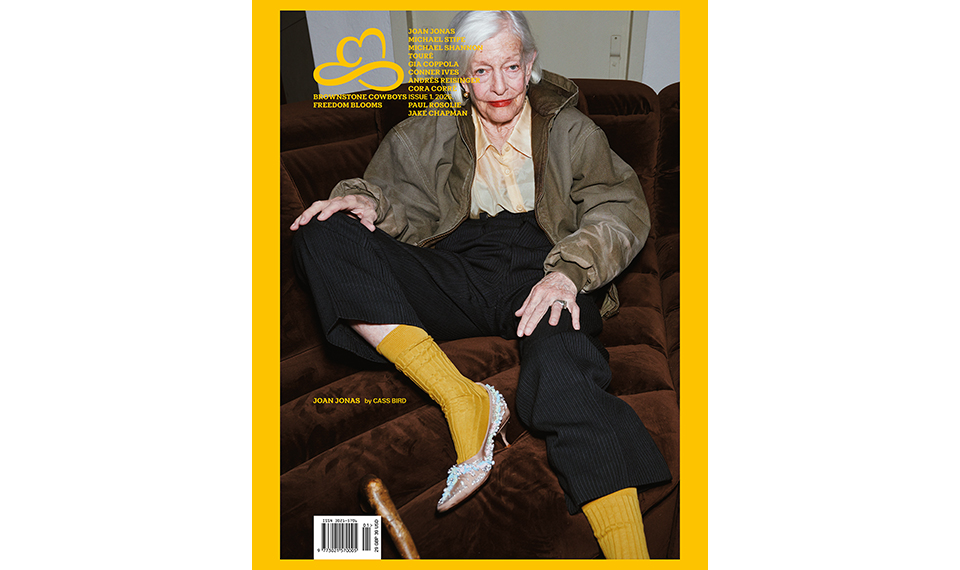
Joan Jonas, photographed by Cass Bird for the cover of Brownstone Cowboys Issue 1, “Freedom Blooms.”
Is there anything you miss about the way the industry operated then? And conversely, is there anything about fashion now that you find more exciting?
It’s very different having to shoot full looks pretty much across the board with brands now. I believe it happened with the introduction of social media, because of people not wanting to post things that have any other brands with them. I remember back in the ’90s, when I first got into the industry, and it felt like there was a real creative exchange between the fashion stylists and the designers, because we mixed things. Whether it was vintage or stylist-owned, a lot of vintage got mixed in, but it ended up being inspiring to the designers. It was like a cyclical thing that everyone was inspiring each other, but it feels now like we all have our hands tied a lot and have to shoot these full looks. You can still create beautiful pictures with amazing teams and photographically and all of that, which obviously a lot of creativity goes into, but there’s something that I feel is missing now, and it’s a bit sad.
Conversely, something that really excites me at the moment is the new Celine, led by Michael Rider. Their advertising campaign is the best thing I’ve seen in a long time. It’s really just beautiful and creative and compelling, and I love the styling and the designs.
What made you want to start Brownstone Cowboys, and how does it reflect your own relationship to fashion and the kinds of people, clothes and stories you’re drawn to?
I think the reason why I wanted to start Brownstone was, I think, triggered by COVID and being locked down and navigating how to shoot a fashion issue of a magazine, before any of us knew what was going on. The idea of having to do that during a pandemic with no vaccines or anything was really scary to me. I think what came after that was the Black Lives Matter protests, and it really made me re-evaluate how I was working in fashion and seeing if I could work out how to do fashion in a way that feels like it’s part of the conversation. It’s uplifting people who are doing the work to make our planet a better place, politically and environmentally. We wanted to try and create something that is talking about the important issues, but bringing it to everyone in a joyful way. People who are doing things to make a difference, no matter how small or huge — that was really the motivation for doing it.
How would you describe your eye as a stylist? What tends to draw you toward a piece, a designer or a particular way of putting things together?
I can’t put my finger on it, but there’s just something visually — and I think it’s got a lot to do with styling, honestly — how much I love something. I think I mentioned before with Celine, the styling and the design are so beautifully intermingled in Celine that I find it really beautiful. So I’d say that it does have a lot to do with the styling of how something’s presented. And I think very photographically as well. I think if their visuals are amazing, then I tend to fall in love with them even more. And then there’s the wearability factor. Can I imagine myself wanting to wear any of this? That’s a big deal for me as well. It has to have some kind of practicality for me to really want it.
Fashion moves so much faster now, between social media, the sheer amount of imagery we consume and the speed at which trends cycle through. Has that changed the way you personally look at clothes or approach styling?
I don’t think so. I think I’ve always liked what I like. I’ve always loved to mix high and low together. That’s been a big thing, which is also why I’m loving Brownstone. We do feature a lot of vintage and really focus on style rather than full looks of anything. We are trying to work with brands in a way that we’re not putting them with a bunch of competitors, so they understand that we’re not just going to shoot a full head-to-toe look. We want to bring some personal style into it, and some emotion.
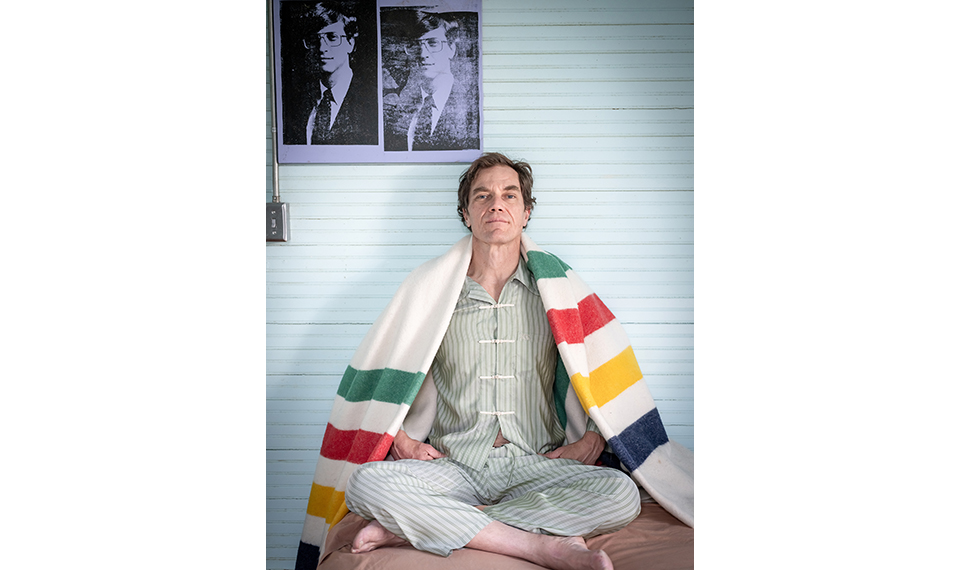
Michael Shannon for Brownstone Cowboys Issue 1. Styled by Heathermary Jackson.
Where are you finding inspiration lately? Do you tend to look within fashion, or somewhere else entirely?
I think I tend to find inspiration from a lot of street style images. Not so much new ones, but maybe more from other times. I love documentary photography and getting inspired by films and old photographic books. It really depends, but I’d say movies definitely have influenced my styling over my career.
Which movies have you found particularly compelling or influential fashion-wise?
Badlands, anything by John Cassavetes and My Own Private Idaho.
Turning to New York Fashion Week, what still feels special about NYFW to you? Do you think its role or energy has changed over time?
New York has always had such a crazy excitement around it for me. Starting my career in London and coming to New York in the ’90s for the show, there’s just something about New York that you can’t touch. It’s just an amazing place. I think from the years when McQueen used to show in New York, and that was the most exciting thing ever when Lee (Alexander) McQueen was still alive and doing his shows. Then this season, Connor Ives came to show in New York from London, which I thought was really great, and that is exciting.
We want more of that — interesting young designers and even some of the bigger ones deciding to come and show in New York to give it that injection of excitement.
Looking back at this season, what were the shows, collections or individual moments that really stayed with you? Were there any surprises or particularly memorable moments from the week?
I went to the KidSuper show, where he uplifts young designers in Brooklyn, which I think is a really brilliant idea. He showed a few looks, but he also had, I think, four different designers locally that he gave the platform to, and then surprised us all by an outdoor concert with Lauryn Hill at the end — which was an extremely exciting bonus that I didn’t know was happening.
Which New York designers are you most excited about right now? Were there any emerging or under-the-radar names this season that you think people should be paying more attention to?
6397 had their first runway show, and that was really beautiful and a big favorite of mine. They have great collections of wearable — a lot of workwear-inspired — just really great, beautiful pieces that are functional and a bit timeless. I also love Society Archive and their show. It’s amazing. Especially as they — you know, for us, it’s right up our street, because they started it as a vintage archive, and then Marcus Allen has developed his own collection, which was amazing and surf-inspired and just really beautiful and exciting.
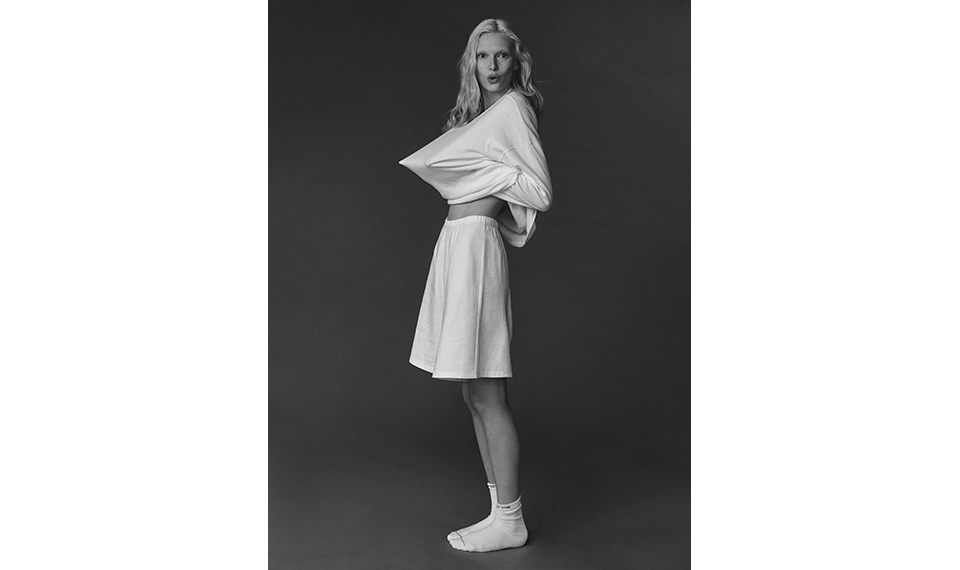
Alex Consani styled by Heathermary Jackson.
After seeing the collections and the way people were dressing throughout the week, what are you excited to see more of? Are there any trends, silhouettes or styling ideas you think are worth embracing?
I like to see people putting things together with their personal style, like not wearing a full look, not wearing all one designer or many designers, but maybe just mixing things with a bit of vintage and having a feeling of realness. And I always love a little bit of a masculine touch to an outfit.
And what are you ready to leave behind? Is there anything fashion has collectively done enough of for the moment?
The really low-waisted bumster jeans that I’m seeing — but that’s just my own personal opinion, and I know people love them, so don’t hate me.
What does your own NYFW look like these days? Do you have any rituals or favorite places you return to during the week — for a meeting, a drink, a meal or just a break between things?
Well, I live in New York, so I will always run home — but I always love to grab a really delicious meal in the early afternoon, in the sort of mid-afternoon, at Bar Pitti. It’s a good place to stop, and it’s always quiet around three or four.
More broadly, what are your New York go-tos when you’re not in Fashion Week mode — favorite stores, places to meet friends or work, or somewhere you go when you need inspiration?
I like to meet sometimes at Grand Central Station and one of the restaurants at the top, like the Oyster Bar or something, and watch people. I love that building. I find the Grand Central Station just the most stunning place. I also love to go to Dimes. That’s my favorite spot for meetings. I mean, I’m really a creature of habit and have been going to those places for 25 years.
Finally, after so many years working in fashion, what keeps it interesting for you? What are you excited about next?
I’m excited about continuing to build Brownstone Cowboys. I’m excited about our Issue Three and who we’re going to get involved — and who’s going to end up being on our covers and features. That’s exciting to me. I’m also very excited to see what Dario Vitale does with Emporio Armani with his new position. That’s really exciting to me because I love what he did with Versace, so I’m super excited about that.
WORDS Hillary Sproul